Queens Park House Clearance Health & Safety Policy
Queens Park House Clearance maintains a robust health and safety policy designed for a professional rubbish removal service area and house clearance operation. This document outlines the commitment of the company to protect employees, contractors, clients and the public from harm while carrying out waste clearance, junk removal and property clearance tasks. The policy applies to all activities undertaken by the team across our service area, encompassing domestic clearances, bulky rubbish collection, and safe handling of household waste.
 The core objectives are to eliminate risks where possible and, where elimination is not feasible, to control hazards through safe systems of work, training and supervision. We emphasise the importance of proactive risk assessment, correct use of personal protective equipment (PPE) and adherence to operating procedures to ensure safe rubbish collection and clearance in the service area. Safety is an integral part of our everyday work and is everyone’s responsibility.
Responsibilities and Organisation
Management is responsible for establishing and maintaining safety arrangements, ensuring that all operatives are competent and that suitable resources are provided. Supervisors must ensure tasks are planned, risk assessed and monitored. Operatives and contractors are required to follow instructions, report hazards and wear prescribed PPE. For clarity, roles include:
- Senior Management: Policy, resourcing and review.
- Supervisors: Job planning, risk assessments and on-site control.
- Operatives: Safe work practices, manual handling techniques and correct use of tools and vehicles.
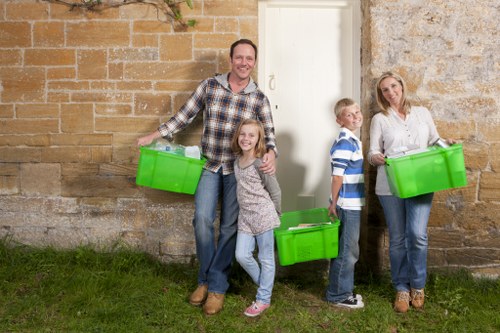 All staff receive an induction covering safe rubbish collection practices, vehicle loading, segregation of waste types and awareness of hazardous materials likely to be encountered during house clearance work.
Risk Assessment and Safe Systems
Before any job, a site survey and dynamic risk assessment must be completed to identify hazards such as sharps, asbestos-like materials, electrical risks, trip hazards and heavy or awkward loads. Controls are applied in a hierarchy: elimination, substitution, engineering controls, administrative controls and PPE. This approach applies to all clearance tasks including loft and shed clearances, garden waste removal and bulky item disposal.
Safe systems include clear exclusion zones, use of mechanical aids for heavy items, two-person lifts for awkward loads, and designated walkways to reduce slip and trip risks. Vehicles used for rubbish transport are inspected daily and loaded to maintain stability and public safety within the rubbish company service area.
Personal Protective Equipment and Equipment Use
Operatives must use appropriate PPE: gloves, safety boots, hi-vis clothing, eye protection and respiratory protection where dust or biohazardous material is anticipated. Tool maintenance, correct use of hand trucks, sack trolleys and lifting straps are mandatory. Electrical tools are PAT-tested and used with proper guarding and safe isolation procedures where required.
Manual handling training is provided and refresher sessions are scheduled regularly to reduce musculoskeletal injuries during household clearances and rubbish collection rounds. Ergonomic practices and team lifting protocols are standard practice when manoeuvring bulky furniture or appliances.
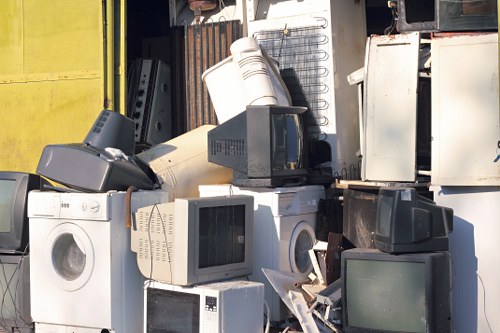
 Hazardous materials found during clearances are segregated and handled according to safe handling procedures. Items potentially containing chemicals, batteries, paints or solvents are separated from general waste and transferred to approved disposal streams. Where contamination or suspected hazardous materials are discovered, work is paused and advice is sought from competent sources before proceeding.
 Vehicles used for site attendance are maintained, driven by qualified personnel and loaded to legal limits. Securement of loads and correct use of covers ensure materials do not pose a risk during transit. Routine vehicle checks, documented inspections and driver briefings form part of our transport safety protocols.
Incident Reporting, Emergency Response and First Aid
All incidents, near misses and unsafe conditions must be reported immediately to supervisors. The company operates a clear incident investigation process to identify root causes and implement corrective actions. First aid equipment is available on-site and nominated first aiders are trained to a recognised standard to respond to injuries sustained during clearing operations in the service area.
Monitoring, Audit and Continuous Improvement
Health and safety performance is monitored through periodic audits, toolbox talks and job observations. Lessons learned from incidents and audits feed into training, procedure updates and operational changes. Management reviews of the policy are carried out annually or sooner if required by operational change. Our commitment is to continuous improvement of safety standards across the rubbish collection and house clearance services.
Environmental considerations are integral: we prioritise reuse and recycling where possible and ensure compliant transfer of waste to authorised facilities. Employees are trained in segregation practices to reduce landfill and support sustainable waste management in the wider service area.
By following this policy, Queens Park House Clearance commits to providing a safe working environment, promoting safe systems of work and ensuring that every team member understands their role in keeping people and places safe during rubbish removal and property clearance activities.